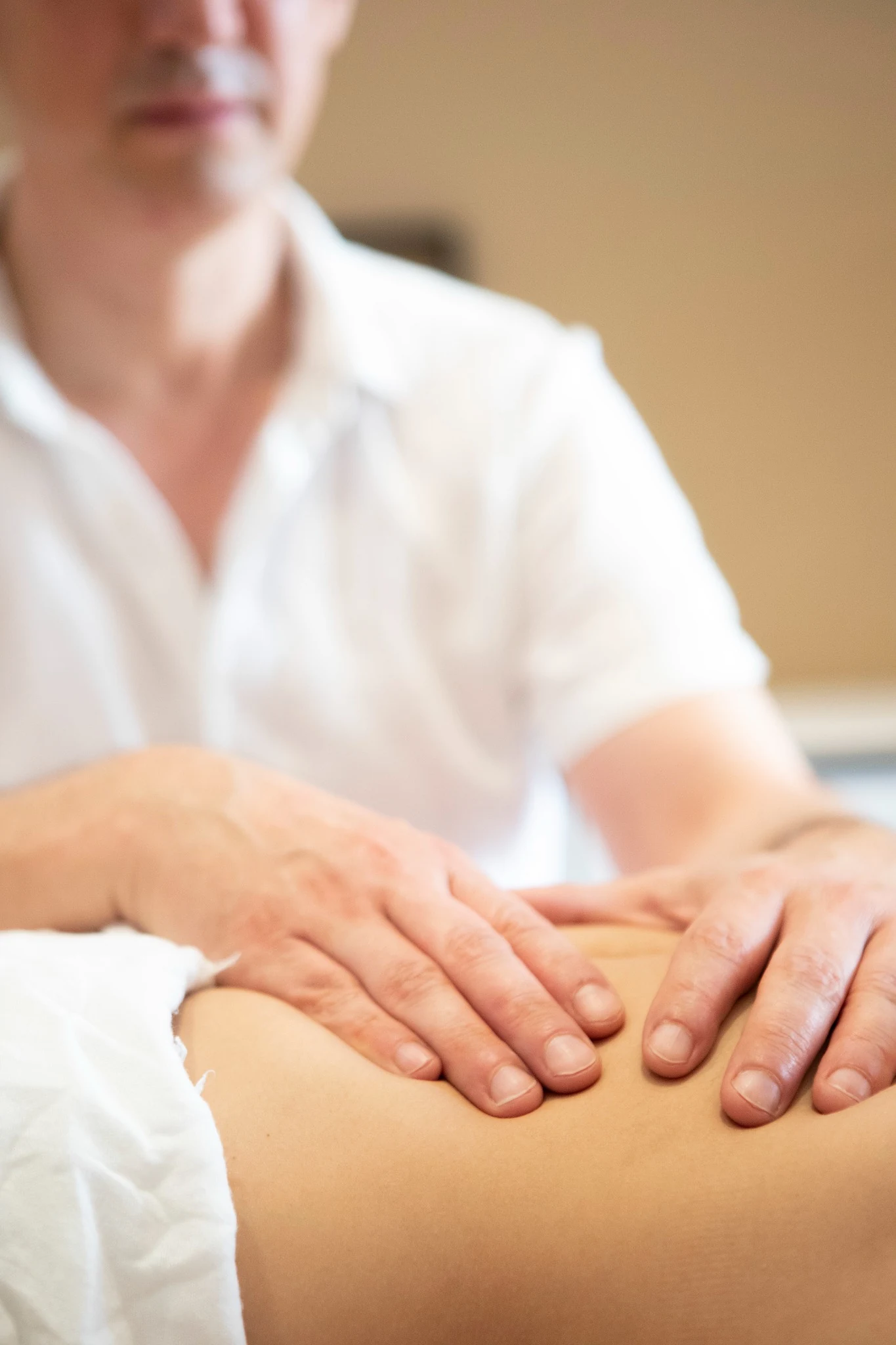

More than the diagnosis

Symptoms deserve to be described precisely.

Many people do not begin by looking for a particular treatment method. They want to understand why something presses, pulls, burns, tightens or keeps hurting.

Sometimes there is a clear diagnosis. Sometimes it does not explain everything. And sometimes, despite thorough examinations, it remains unclear why symptoms return or are felt in several places.

We therefore begin with what you actually perceive. Where is the symptom felt? What does it feel like? When does it become stronger? What changes while sitting, moving, breathing, sleeping or over the course of the menstrual cycle?

This can reveal physical connections that we can examine more closely.

Osteopathic Women’s Health

Menstrual cycle, lower abdomen and pelvic floor

Period pain may extend into the back, groin or legs. Pressure in the lower abdomen, irritable bladder symptoms or pain while sitting may also occur.

A pelvic floor that remains tense may be felt as pulling, burning, tightness or discomfort during physical intimacy. Vaginismus and vulvodynia may be associated with protective tension in several areas of the body.

We look at how the lower abdomen, pelvic floor, sacrum, back and breathing work together.

Symptoms associated with endometriosis

With endometriosis, pain, exhaustion and bowel, bladder or pelvic-floor symptoms may persist far beyond menstruation.

Even where there is a clear diagnosis, it does not always explain every tension in the body. Scars after procedures, a tight abdomen, a tense pelvic floor, protective posture and the anticipation of renewed pain may add further strain.

Existing gynaecological findings and ongoing treatment are, of course, taken into account.

Osteopathy and body psychotherapy

Fertility support

A prolonged fertility journey can be demanding physically and emotionally. Examinations, waiting, hormonal treatment and repeated disappointment often change the relationship with one’s own body as well.

Lower-abdominal symptoms, scars, endometriosis, a tense pelvic floor, restless sleep or the feeling of no longer being able to let go may exist at the same time.

We consider the physical situation alongside what this period evokes emotionally. Depending on the concern, the emphasis may lie more on osteopathy, body psychotherapy or a combination of the two.

Abdomen · scars · stages of life

Pregnancy, birth and scars

During pregnancy, posture, breathing and the load on the back, abdomen, pelvis and pelvic floor change.

After birth or gynaecological procedures, scars may pull, burn, feel numb or unfamiliar. Deeper layers may also become less mobile and change movement in the abdomen, pelvis or back.

We consider not only the visible scar, but also the surrounding areas, breathing and the sense of the affected body region.

Abdomen and digestion

The abdomen may feel tight, bloated, sensitive or unsettled. Symptoms may change with eating, bowel movements, breathing, the menstrual cycle or during stressful periods.

We consider the abdominal wall, diaphragm, back and pelvis in their interaction. Scars or unconsciously keeping the abdomen drawn in may also change movement and tension.

Head · breathing

Rib cage, breathing and diaphragm

Some patients feel unable to breathe in fully. The rib cage feels tight, the shoulders remain raised or pressure develops in the upper abdomen.

Breathing moves more than the lungs. The ribs, sternum, spine, abdominal wall and diaphragm work together with every breath. We assess where this movement is restricted and which areas hold with it.

Movement · inner strain

Back, shoulder, hip and legs

Back pain does not always arise only where it is felt. A restricted hip changes the pelvis. A restricted shoulder affects the rib cage and neck. Tension in the legs may continue into the lower back.

Prolonged sitting, standing unevenly, screen work, protective posture or physical overuse may prevent the body from distributing strain evenly.

Anxiety, depression, exhaustion and sleep

Sometimes strain first becomes visible in the body. Breathing shortens. The jaw keeps holding. The abdomen remains tense. Sleep becomes light, or the body cannot truly settle even at rest.

Others experience heaviness, withdrawal or the feeling that parts of the body can barely be felt.

In body psychotherapy, we do not work only with words. Breathing, awareness, posture and—where appropriate—touch may also be included.

ADHD, ADD and neurodivergence

When too much arrives at once.

A crowded mind, sensory overload, hyperfocus, inner restlessness and a later drop in energy can shape daily life in very different ways.

In teenagers, girls and women, ADHD or ADD often appears more quietly and is compensated for over long periods. Autism, a PDA profile, high sensitivity, giftedness, PMS and cycle-related changes may also be relevant to the personal experience.

Body-centred support combines perception, regulation, movement, breathing and treatment of specific physical tension patterns.

Considering the whole picture

You do not need to classify your symptoms yourself.

A symptom does not have to be clearly assigned to osteopathy, women’s health or body psychotherapy before you come to the practice.

In a complimentary introductory consultation, we discuss what you feel, which findings already exist and which treatment approach may suit your situation.

Complimentary introductory consultation

Begin with a personal conversation.

In approximately 20 minutes, we clarify what brings you to the practice, which symptoms are present and what emphasis may suit you.

Telephone 030 2928111 · WhatsApp Business 0176 23441172 · contact@marek-kalbus.de