
conSenso® Practice

Support during afertility journey

When one wish begins to shape the whole of daily life

Osteopathic treatment of the abdominal and pelvic region

Initial orientation

Physical and emotional strain

A prolonged fertility journey can take up a great deal of space in everyday life.

Appointments, examinations and waiting begin to structure daily life. Hope and disappointment alternate. The body is watched closely and sometimes judged mainly by whether it is “working”.

Many women also experience physical symptoms during this time. The lower abdomen remains tense. The pelvic floor keeps holding. Scars pull or period pain becomes more noticeable. The back, bowel, bladder or breathing may also be affected.

Our support considers both: the physical situation and what this time evokes emotionally.

Physical support

When the body carries the burden as well

The abdomen, pelvis, pelvic floor, back and diaphragm work closely together.

If the lower abdomen remains tight, breathing often changes as well. A tense pelvic floor may intensify pressure, pain or symptoms during physical intimacy. Scars after laparoscopy, curettage or other procedures can create pulling in neighbouring areas.

We look at where movement is restricted and which areas place additional strain on one another.

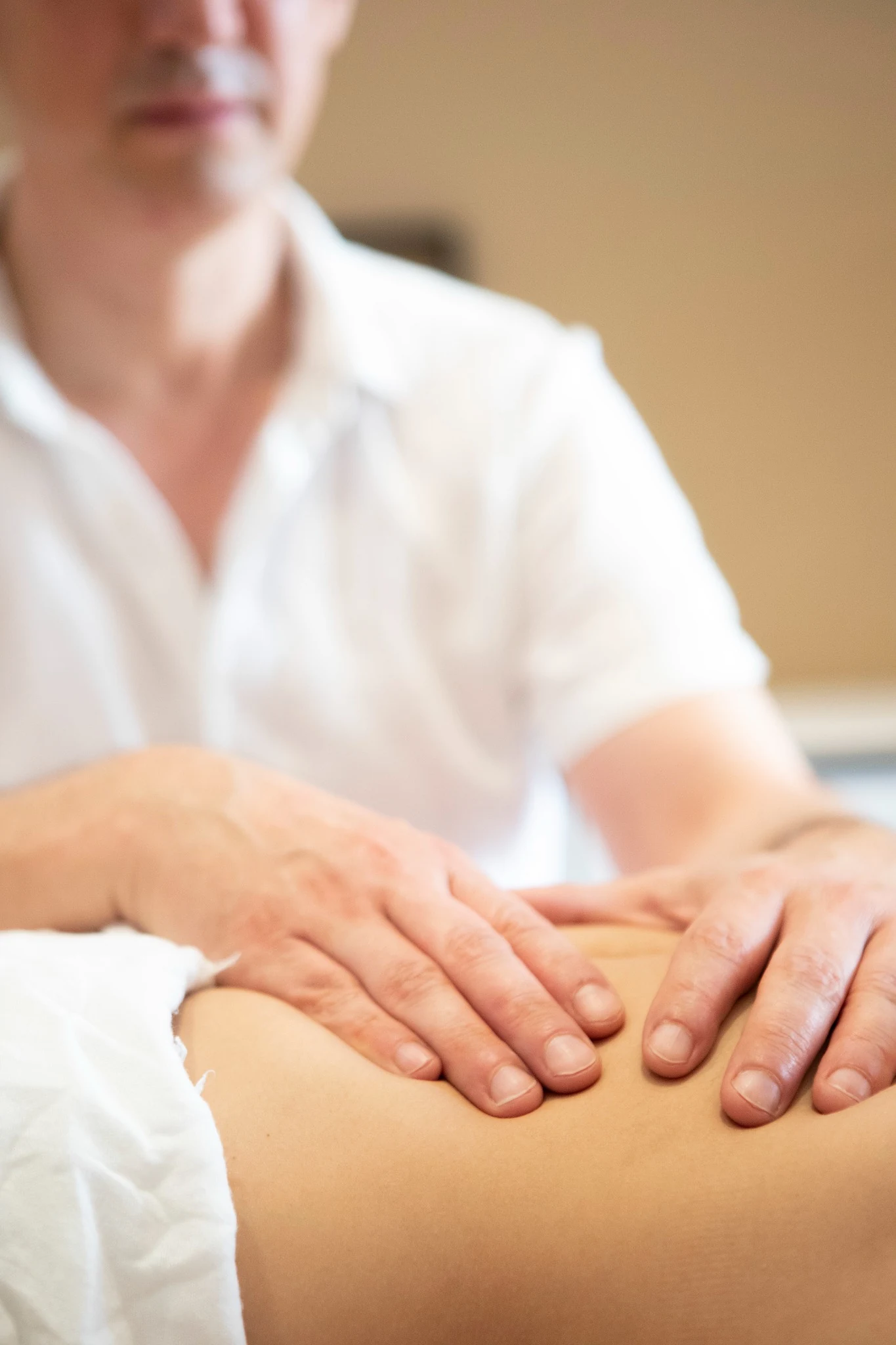
We work calmly and sensitively with the abdominal wall, pelvis, back, diaphragm and pelvic floor. Treatment is predominantly external and is adapted to what is genuinely possible at the time.

Endometriosis and fertility

With endometriosis, several burdens may come together.

Cycle-related or persistent pain, exhaustion, surgery and pain during sexual intercourse can change trust in one’s own body. Examinations and treatment at a fertility clinic may add further strain.

Osteopathic treatment focuses on symptoms that may place additional strain on the body: for example, a tight lower abdomen, scars, pulling in the pelvis, a tense pelvic floor or pain in the back and sacrum.

Where anxiety, exhaustion or the expectation of renewed pain play a role, body psychotherapy may be included.

Existing medical findings and ongoing treatment are taken into account.

Emotional strain

When hope and disappointment alternate

Each cycle can awaken new hope. At the same time, every further disappointment may become harder to bear.

Some women experience intense time pressure. Others feel exhausted by examinations, hormonal treatment or the constant question of what should happen next.

In body psychotherapy, these burdens do not have to be explained or judged. They may first simply be noticed.

We notice how the body responds to pressure, uncertainty and repeated disappointment. Breathing may become shallower. The abdomen holds. Sleep becomes unsettled, or the body remains tense even at rest.

Treatment may help these reactions become noticeable earlier and make more calm, trust, support and distance available again.

The aim is to make this demanding time more bearable, physically and emotionally.

Trust · relationship

Body awareness and trust

Over the course of a long fertility journey, the relationship with one’s own body can change.

The cycle is monitored. Physical signs are checked. Examinations and procedures may reinforce the feeling that the body can no longer be fully trusted.

Some women come to experience the abdomen or pelvis only as a place of pain, worry or medical treatment.

Within our osteopathic and body-psychotherapeutic support, this area may gradually be experienced in a different context: not only examined and assessed, but perceived, held and treated with care. Together, we work towards the body no longer being experienced only as the object of examinations and expectations, but once again as a familiar and reliable part of one’s own experience.

Sexuality and relationship

A fertility journey can also change physical intimacy.

Sexuality becomes more closely organised around the cycle. Appointments and expectations are added. Spontaneous closeness may become more difficult, and pain, withdrawal or tension may arise.

Partners may also respond differently to hope, worry and disappointment.

Emphasis · approach

Osteopathy and body psychotherapy

The emphasis of support can vary.

Where pain, scars, a tense pelvic floor or abdominal and back symptoms are central, the emphasis usually lies on osteopathy.

Where exhaustion, anxiety, sleep difficulties or the loss of a safe sense of the body are particularly pronounced, body psychotherapy may be given more space.

The two fields often come together over time.

Not every treatment automatically includes both. We follow the individual concern and what is helpful in the moment.

Assessment and treatment

Before the first treatment, we discuss existing findings, previous procedures, medication, fertility treatment to date and current symptoms.

The physical assessment follows what is actually burdensome. We pay attention to how the abdomen, pelvis, pelvic floor, back and breathing work together.

Touch follows the tension in the tissue. Restricted areas are not treated against resistance. We wait until movement becomes possible and the tissue begins to yield.

Body-psychotherapeutic touch takes place only after prior discussion. You remain responsive at all times and help decide what feels appropriate.

Treatment always takes place in a calm, focused and particularly protected atmosphere.

The framework of support

Physical symptoms and inner strain may be considered together.

Our work addresses physical symptoms and the strain that a difficult fertility journey may bring.

It can meaningfully complement ongoing gynaecological or medical fertility treatment.

Medical diagnostics and treatment remain unchanged. We include existing findings and speak openly if further medical assessment appears appropriate.

Complimentary introductory consultation

Begin with a personal conversation.

A complimentary introductory consultation can help clarify whether osteopathic or body-psychotherapeutic support may suit your fertility journey.

In approximately 20 minutes, we discuss which symptoms are present, which treatment has already taken place and what emphasis may be appropriate for you.

Telephone 030 2928111 · WhatsApp Business 0176 23441172 · contact@marek-kalbus.de