
conSenso® Practice 1 · Berlin-Wilmersdorf

OsteopathicWomen’s Health

Support for symptoms involving the menstrual cycle, abdomen, pelvis and pelvic floor.

Osteopathic treatment of the abdominal and pelvic region

Physical connections

The body works as a whole.

The abdomen, pelvis, pelvic floor, back and breathing work closely together. If one area remains tense, the effects may become noticeable elsewhere.

A tense lower abdomen changes breathing. A tight pelvic floor may place additional strain on the back, bladder, uterus or bowel. Scars after surgery can create pulling in neighbouring areas.

We look at where movement is restricted, where tissue holds tension and how symptoms continue through the body. Treatment is adapted to the individual concern and to what is genuinely possible in the moment.

01 · Menstrual cycle and endometriosis

Cycle-related symptoms and period pain

Period pain does not always remain confined to the lower abdomen. It may extend into the back, pelvis, groin or legs. Some patients also experience pressure, nausea, bloating, exhaustion or unusually strong tension throughout the body.

We assess whether the abdominal wall, pelvis, pelvic floor, sacrum or diaphragm are also holding tension. We work where tension restricts the body’s natural room for movement.

The aim is to reduce physical strain that may intensify symptoms before or during menstruation.

Symptoms associated with endometriosis

Endometriosis can affect daily life far beyond the days of menstruation. Pain, exhaustion, pain during sexual intercourse and bowel or bladder symptoms may persist for long periods.

Osteopathic treatment is not directed at endometriosis lesions themselves. We address symptoms and tensions that may accompany the condition: a tight abdomen, pulling and pressure in the pelvis, scars after procedures, a tense pelvic floor, or pain in the back and sacrum.

When pain persists for a long time, the way the body responds to touch, movement or the anticipation of further symptoms often changes as well. Where these connections matter, osteopathic treatment may be complemented by body psychotherapy, breathing work or hypnotherapy.

Neurodivergence and women’s health

ADHD and ADD in girls and women.

In girls and women, ADHD often looks different from the familiar image of an outwardly restless boy. Daydreaming, inner restlessness, over-adaptation, perfectionism and the effort required for organisation may remain unnoticed for a long time.

Puberty, the menstrual cycle and PMS affect concentration, sensory processing, mood, sleep and bodily tension for some patients. Prescribed ADHD medication may also feel different across cycle phases.

Bringing osteopathic women’s health and body psychotherapy together makes it possible to observe and support these cyclical and neurodivergent patterns as one connected experience.

02 · Pelvic floor and physical intimacy

Pelvic floor and chronic pelvic pain

The pelvic floor supports the bladder, bowel and internal organs. It provides stability, yet also needs to be able to yield.

If it remains tense, pressure, pulling or pain may develop. Symptoms while sitting, urinating, passing stool or during physical intimacy may also be connected. Some patients additionally notice a tight abdominal wall, persistent back pain or a feeling that the pelvis cannot truly let go.

Treatment is generally external. We may work through the bony edges of the pelvis, the groin, inner thighs, abdominal wall or diaphragm.

Only when it is medically meaningful, cannot be resolved externally and has been discussed together might an internal treatment be considered as an additional step.

Vaginismus and vulvodynia

With vaginismus or vulvodynia, the body may respond to the expectation of touch with protection and tension. The pelvic floor contracts, breathing may stop and the abdomen becomes tight. Vulvodynia may also involve burning, stinging or unusually strong sensitivity in the external intimate area.

We proceed slowly and with very clear communication. Direct contact with the pelvis is not always necessary. In some cases, symptoms may also ease through treatment of the abdomen, back, diaphragm, legs or jaw.

The aim is never to force an opening. Safety, boundaries and self-determination remain central throughout treatment.

03 · Change and recovery

After gynaecological procedures

Scars do not end at the skin. Deeper layers may also become less mobile after surgery and transmit pulling into the abdomen, pelvis or back.

After a caesarean section, laparoscopy, endometriosis surgery or another gynaecological procedure, we look at how freely the scar moves and how the surrounding areas respond.

We work with restricted transitions and support the skin, connective tissue and abdominal wall in moving more freely against one another. Breathing, posture and the pelvic floor are also included when they have been affected by the procedure.

Pregnancy and the period after birth

During pregnancy, posture, breathing and the load on the back and pelvis change. Increasing weight affects the abdominal wall, pelvic floor, diaphragm and spine.

After birth, the body needs time to reorganise. Back pain, an unstable or tense pelvis, caesarean or birth-related scars and a changed sense of the body may remain.

Treatment is adapted to the stage of pregnancy, the course of the birth, the phase of healing and, above all, to what feels comfortable and possible at the time.

Osteopathy and body psychotherapy

Fertility Support

A prolonged fertility journey often involves more than medical findings and appointments. Repeated examinations, waiting, hormonal treatment and disappointment can place a considerable burden on both body and mind.

We take physical symptoms into account alongside this emotional strain. These may include lower-abdominal pain, scars, a tense pelvic floor, endometriosis-related symptoms or the feeling that the body can no longer be trusted.

Depending on the situation, the emphasis may lie more on osteopathy, body psychotherapy or a combination of the two. This support can be integrated well into ongoing gynaecological or reproductive medical treatment.

The body and emotional strain

When several levels come together.

Persistent pain can change sleep, mood, relationships and the sense of one’s own body.

Conversely, anxiety, stress or difficult experiences can cause muscles to hold unconsciously and make it harder for the body to settle.

These connections are included only when they genuinely matter for the symptoms. What counts is what becomes apparent in the individual situation.

Assessment and treatment

Calm, precise and in continuous communication.

Before the first treatment, we discuss the current concern, existing findings, previous procedures, medication and any other factors that may be relevant.

The assessment follows the symptoms. We pay attention to how the abdomen, pelvis, pelvic floor, back and breathing work together. Assessment and treatment often flow into one another.

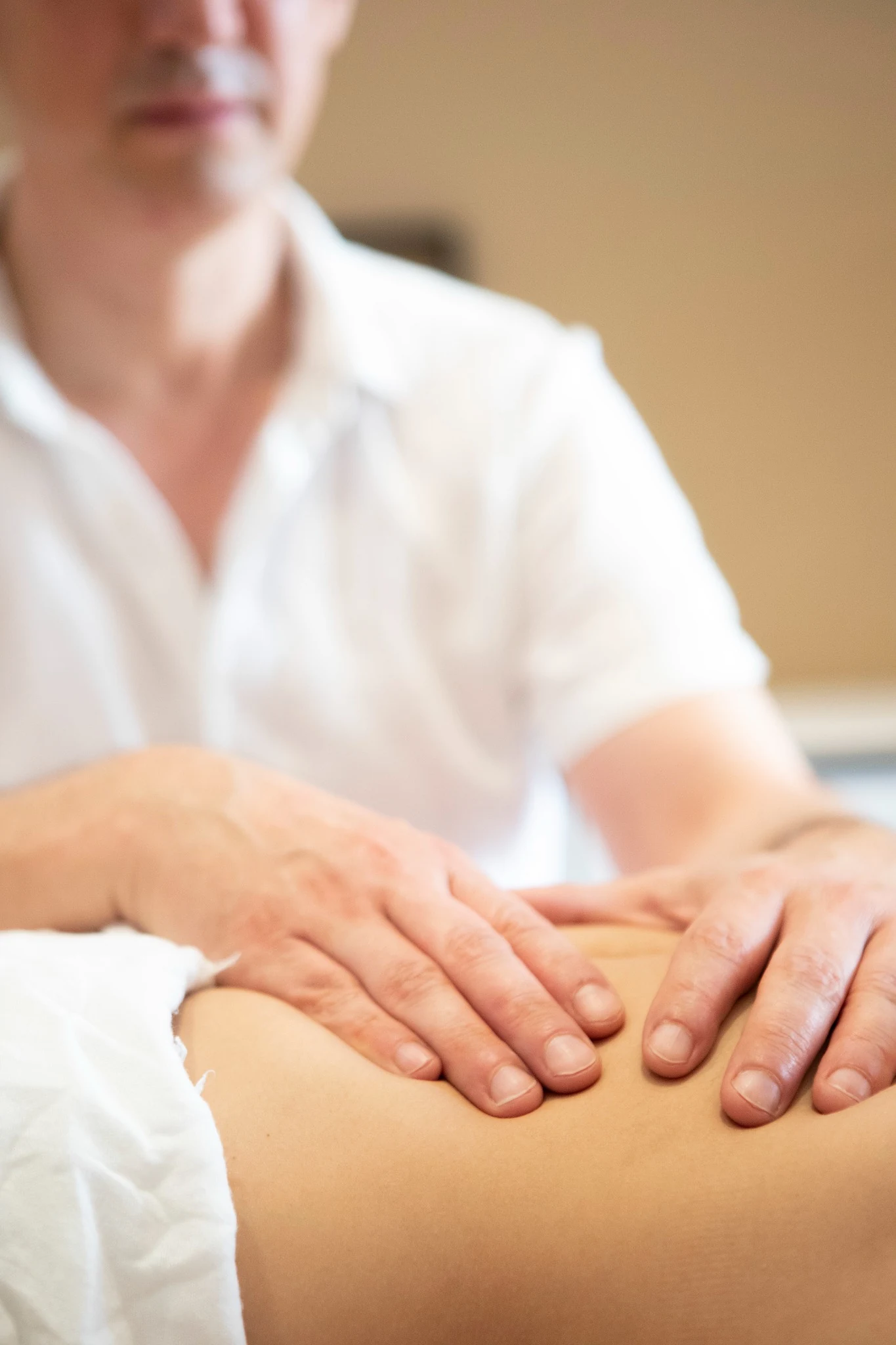
Touch follows the tension in the tissue. When one area begins to yield, movement elsewhere often changes as well. The approach and intensity are continually adapted to the body’s response.

Treatment takes place in a very calm, focused and particularly protected atmosphere. If preferred, women’s-health treatments may, by prior arrangement, be carried out by a female therapist or with her present.

Touch follows the tension in the tissue.

Complimentary introductory consultation

Begin with a personal conversation.

A complimentary introductory consultation can help clarify whether osteopathic women’s health is appropriate for your particular concern.

In approximately 20 minutes, we discuss what brings you to the practice, which symptoms are present and what emphasis may suit you.

Telephone 030 2928111 · WhatsApp Business 0176 23441172 · contact@marek-kalbus.de