Lower abdomen, menstrual cycle and pelvic floor
Period pain · Symptoms associated with endometriosis · chronic pelvic pain · pressure or pulling in the lower abdomen · irritable bladder symptoms · a tense pelvic floor · Vaginismus · Vulvodynia
conSenso® Practice
Un filo una donna (2018)Sculpture by Giancarlo Morandi

The meaning of the name
con Senso comes from Italian and means “with meaning”. Our aim is not only to work in a medically sound and knowledgeable way, but also with great attentiveness, with all the senses and in profound calm as we address your concerns and questions.
The therapeutic approach
The body does not work in separate parts. Pain can change posture. Tension makes breathing shallower. Poor sleep causes muscles to tighten more quickly, and tense, tight muscles can in turn disturb sleep.
Some symptoms remain clearly localised. Others spread in wider circles. With endometriosis, a fertility journey, persistent pain, anxiety or exhaustion, several burdens often come together.
Osteopathic women’s health and fertility support shape the professional profile of conSenso® Practice. Classical osteopathic concerns are also part of our daily work. Body-psychotherapeutic experience is included where anxiety, stress, trauma, exhaustion or persistent pain place an additional burden on the body.
The three fields are not automatically blended together. They come together only where this is meaningful for your particular concern.
Treatment always develops from what the body shows and from what is genuinely possible in that moment.
From the patient’s perspective
Many patients do not arrive with a ready-made explanation. They come with pressure in the lower abdomen, period pain, a pelvic floor that will not let go, a jaw that keeps holding, or a back that repeatedly pulls and aches.
With endometriosis or fertility concerns, there are often already findings, examinations and treatments. Even so, no single finding necessarily explains everything that is felt in the body. Scars, posture, breathing, sleep and persistent tension may also shape the symptoms.
We therefore look not only at the name of a symptom, but also at where it is felt, when it changes and which other areas react with it.
Abdomen, pelvis and menstrual cycle
Period pain, symptoms associated with endometriosis, a tense pelvic floor or scars after surgery can affect far more than the lower abdomen. The back may pull, the abdomen remain tight or breathing become shallower.
Symptoms when sitting, urinating, during physical intimacy or sexual intercourse may also be part of the picture.
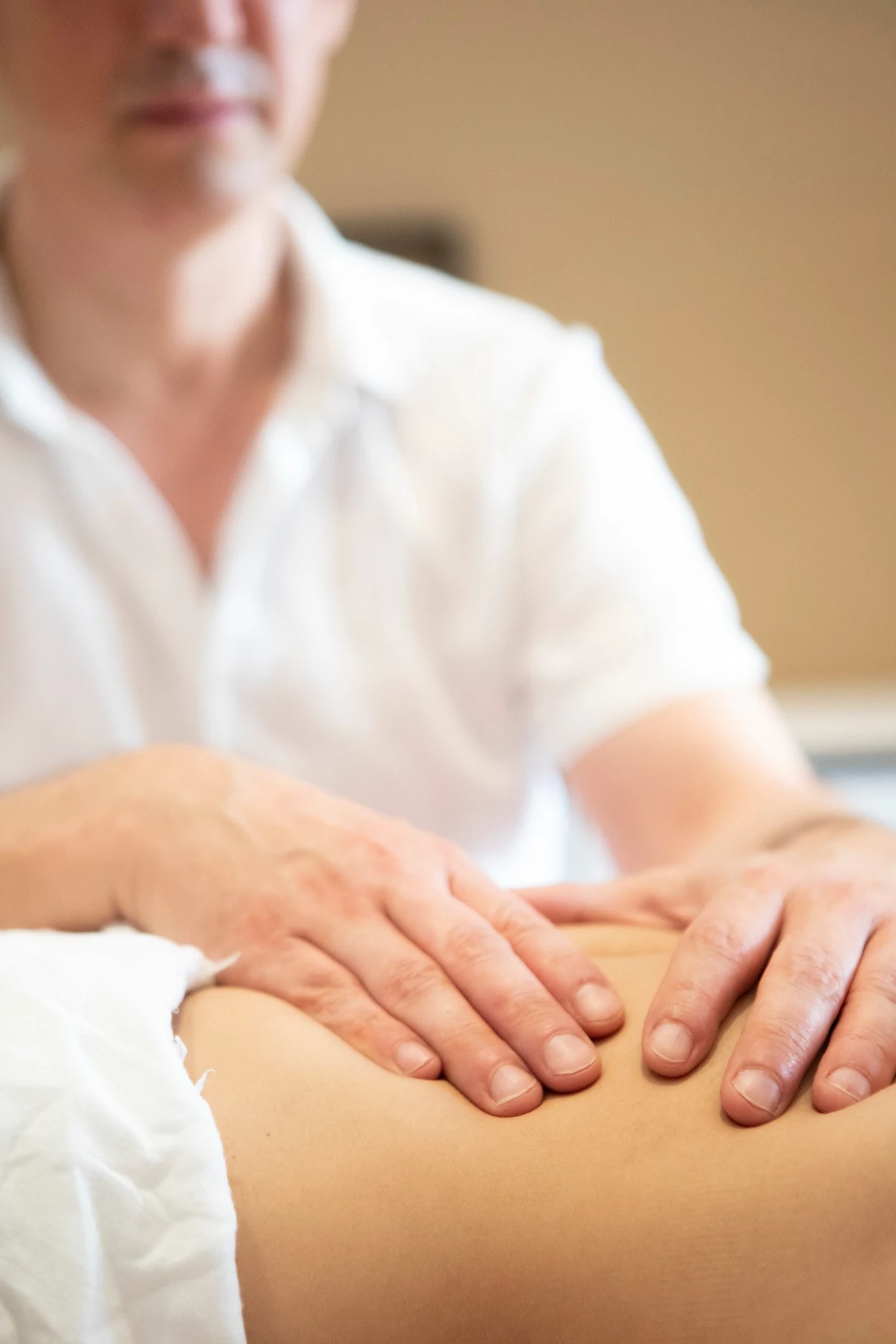
We look at where tension develops and which areas work together. Abdomen, pelvis, back and breathing influence one another. Treatment is usually external and is always adapted to what feels genuinely possible at the time.
During a difficult fertility journey, we consider physical symptoms as well as the strain that examinations, treatments, waiting and repeated disappointment can bring.
Depending on the situation, the emphasis may lie more on osteopathy, body psychotherapy, or a thoughtful combination of the two.
Physical concerns
The back, neck, shoulder or jaw can become tight and painful after prolonged sitting, one-sided strain, unhelpful habits or stress.
Sometimes pain is clearly located in one place. At other times, tension continues across several areas—from the jaw into the neck, from the shoulder into the rib cage, or from the lower back into the pelvis.
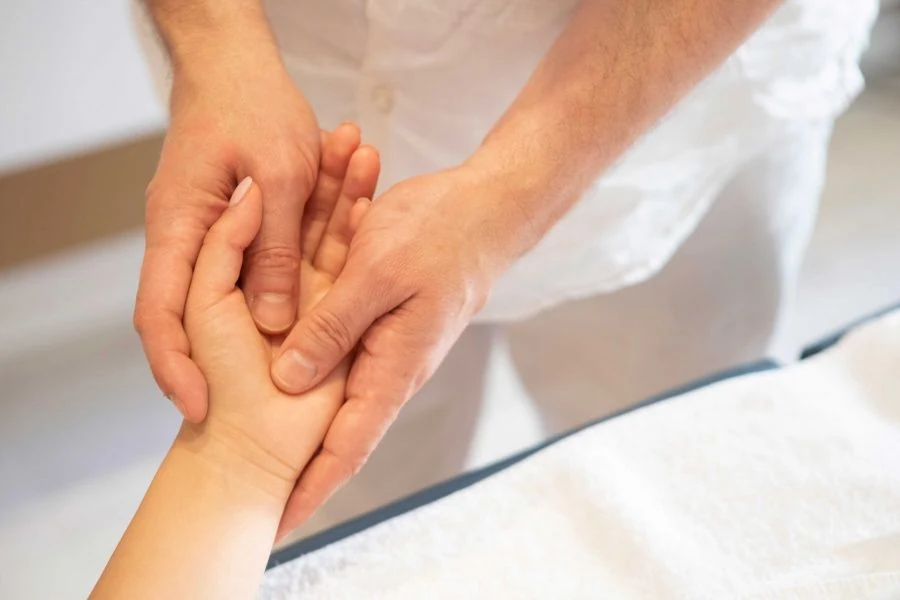
We do not look only at the place that hurts. We trace the connections the body reveals and follow them. With calm, precise touch, we work where movement is restricted or tension continues into another area.
Not every concern is complex. A tense neck after screen work, a painful shoulder or an overworked back are equally part of everyday practice.
The body and emotional strain
Emotional strain changes the body in different ways. Anxiety may keep it alert and tense. Depression or exhaustion can dampen movement, breathing and the sense of the body.
Body psychotherapy takes these differences seriously. It combines conversation with awareness, breathing, posture and—where it feels appropriate—therapeutic touch.
It can take place as a treatment in its own right or complement osteopathic care when protection, withdrawal or chronic overload shape the physical course of symptoms.
It is never assumed that physical symptoms are psychologically caused.
A distinctive part of the practice is ketamine-assisted body psychotherapy at the Kurfürstendamm location.
There, intravenous ketamine infusions are medically supervised and embedded within body-oriented and/or talking psychotherapy. We are happy to discuss the details in a personal introductory consultation.
Orientation
Period pain · Symptoms associated with endometriosis · chronic pelvic pain · pressure or pulling in the lower abdomen · irritable bladder symptoms · a tense pelvic floor · Vaginismus · Vulvodynia
physical symptoms and inner tension during a fertility journey · symptoms after procedures · caesarean scars · pregnancy · the period after birth
Headaches and migraine · a tight jaw and clenching · Tinnitus and ear pressure · neck pain · tension between the shoulder blades
shallow breathing · tightness in the chest · upper-abdominal pressure · IBS and functional abdominal symptoms · a tight or bloated abdomen · changing bowel patterns
pain after prolonged sitting · restricted movement · one-sided strain · pulling between the shoulder blades or from the lower back into the pelvis
inner alarm · palpitations · shallow breathing · dizziness · restlessness · disturbed sleep
physical heaviness · withdrawal · loss of energy · disturbed sleep · difficulty concentrating · inner emptiness · Effects of trauma and bodily protective responses
You do not need to decide for yourself which field your symptoms belong to. In a complimentary introductory consultation, we can consider together which approach may be appropriate for your situation.
Experience and calm
conSenso® Practice opened in Berlin in May 2016. Since then, the connection of osteopathy, women’s health and body psychotherapy has developed into a distinctive and widely proven approach.
Many patients come through personal recommendation. The practice works by appointment, leaving sufficient time for every session and usually avoiding waiting times.
This creates a calm, focused and particularly protected atmosphere.
Berlin
Pfalzburger Straße 43 · 10717 Berlin
Regular treatments take place at conSenso® Practice 1: integrative osteopathy, osteopathic women’s health and body psychotherapy.
The practice is on the ground floor. The separate entrance is immediately to the left of number 42.
Kurfürstendamm 61 · 10707 Berlin
At conSenso® Practice 2 within Institut Temedos, ketamine-assisted psychotherapy and body psychotherapy take place with medical supervision.
The practice is on the fifth floor. Appointments are arranged individually.
First contact
The complimentary introductory consultation lasts approximately 20 minutes.
In a personal conversation, we calmly discuss what brings you to the practice, which symptoms are present and which emphasis may suit you. We can also clarify which location is appropriate.
The consultation can be arranged through Jameda or Doctolib, by telephone or via WhatsApp Business. It does not yet include a physical examination or treatment.
New, severe or unclear symptoms should first be assessed by a physician. conSenso® Practice does not provide acute medical care.